
What is the spring amendment budget?
The spring amendment budget (vårändringsbudgeten) is usually mainly used to tweak or add bits and pieces to Sweden’s main annual budget, which was presented last autumn.
What do we know about what’s in it?
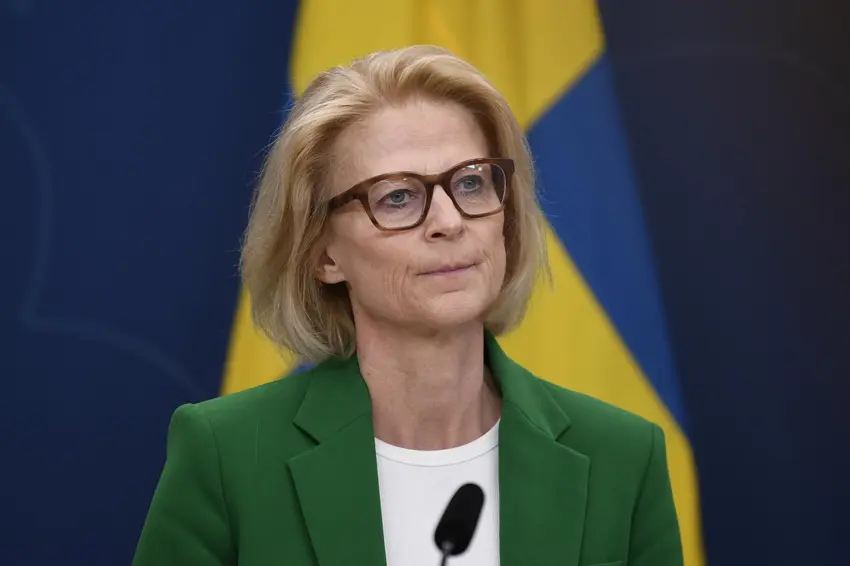
Finance Minister Elisabeth Svantesson had announced ahead of the press conference that there would be 11.5 billion kronor of reforms in the spring amendment budget, including among other things an increase to the ROT tax reduction which currently allows households to claim back 30 percent of the cost of labour on maintenance work such as repairs, conversions and extensions.
Under the new proposal, which is expected to cost the government 4.35 billion kronor, the ROT reduction will be increased temporarily to 50 percent from May 12th until the end of the year in order to kickstart the economy. This will take up 40 percent of the budget.
According to economist Shoka Åhrman from pension company SPP, most households are unlikely to see the effects of this on their finances.
“The ROT reduction is an issue that will affect some people’s wallets, but in reality not for everyone,” she told the TT newswire.
“It’s usually used by people with higher incomes.”
She added that it’s not uncommon for the spring amendment budget to have few posts that will directly affect Swedes’ personal finances.
“Changes in the spring usually affect the economy more broadly, it’s not that usual for there to be concrete changes as far as personal finances are concerned.”
“Having said that, the previous decisions on lower tax for work and pensions will remain active.”
The government and the Sweden Democrats have also agreed to put aside 500 million kronor for road maintenance. There are proposals concerning summer jobs for young people and reforms of professional higher education courses to offer more, shorter courses (700 million kronor).
In addition to this, 500 million kronor will go towards mental healthcare for both adults and young people, and 484 million will go to the Swedish Prison and Probation Service, in part to increase the number of spaces in prison and pre-trial detention.
Another 357 million will go towards preventing youth crime, including 200 million for increased places in SIS homes – compulsory care homes for young people involved in crime, with psychosocial problems or with substance abuse issues.
Following the school attack in Örebro in February, 353 million kronor has been earmarked for increased security in schools.
The government and the Sweden Democrats have also allocated 25 billion kronor to defence, 16.5 billion will go to Ukraine, and 96 million kronor has been put aside for what the government describes as a “targeted package of measures against hybrid threats”.
Planned reforms to a-kassa unemployment insurance, which would tie the benefit to income rather than hours worked, will also be brought in earlier, in August instead of at the beginning of October.
Another 6.5 billion kronor will go to Klimatklivet, an investment support programme for regions and municipalities to reduce carbon emissions, and 2.2 billion kronor to Industriklivet, a similar programme to finance innovation in industry which will benefit the environment.
Other smaller posts include 30 million kronor to national mapping agency Lantmäteriet, to better protect classified information and hire new staff, and 71 million kronor to the Swedish Maritime Administration to fund sea and air rescues.
Schools have been allocated 82 million kronor to cover the costs of carrying out national tests on paper instead of digitally this spring, and 7 million kronor has been allocated to Swedish county boards to help manage wolf populations.
Comments (2)